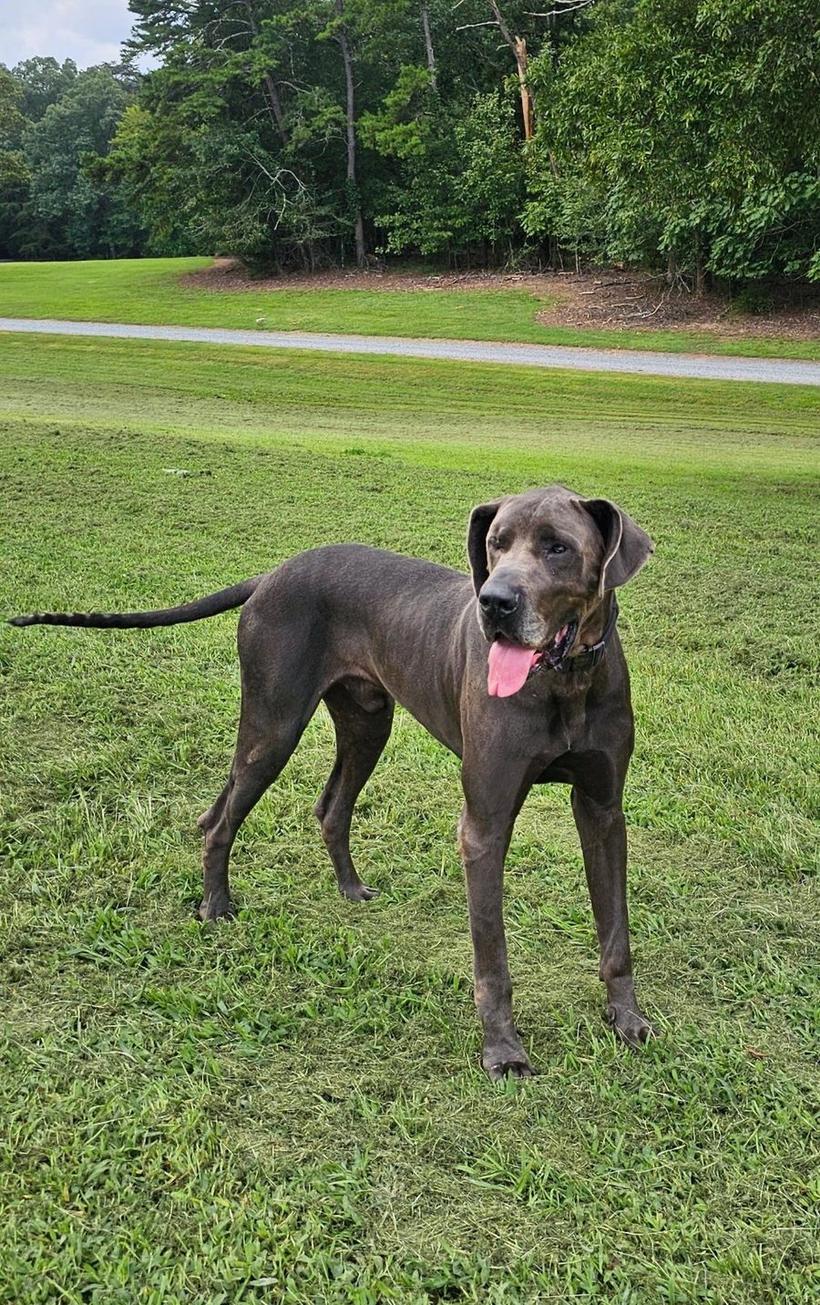
In town, the best tracker is mostly about battery and price. In the country, it's about three other things: whether the tracker's network reaches the places your dog goes, how much land you need to cover, and how much tree cover sits between the collar and the sky.
Our picks by situation
| Your situation | Our pick | Why |
|---|---|---|
| Decent cell coverage on your land | Fi Series 3+ or Tractive DOG 6 | Weeks of battery (Fi) or the lowest cost (Tractive), with escape alerts and live tracking. Check coverage first. |
| Spotty coverage, and you need to keep your dog in | SpotOn Nova | Its fence runs on satellites alone, with no plan or cell signal needed, and it has a Forest Mode for wooded land. |
| A yard-sized fence with occasional dead spots | Halo Collar 5 | Fences are stored on the collar, and boundary feedback keeps working without a connection in High GPS mode. |
| No cell service at all, and you need to see where your dog is | Fi Ultra | Falls back to a satellite connection through T-Mobile's T-Satellite with Starlink. US only. |
| Working or hunting dogs ranging for miles | A radio GPS system (Garmin Alpha, Dogtra Pathfinder 2) | No cell network at all: the collar radios its position to a receiver you carry, up to about 9 miles in open country. |
We may earn a commission if you buy through our links. It never changes our picks. How we make money
Start with coverage, not the tracker
Cellular trackers use their own networks, not yours. Fi's Series 3+ runs on AT&T's LTE-M network, Tractive roams across partner networks, and Halo switches between carriers. A spot where your phone struggles may still work for a tracker, and the reverse happens too. Walk your property and your dog's usual routes during the return window with the tracker in live mode. Our guide to trackers without cell service shows how to check each network's map before you buy.
If there's no signal at all: satellite and radio
Fi Ultra is the only cellular pet tracker we know of with a satellite fallback. Fi says it switches to satellite automatically when Bluetooth, Wi-Fi and cellular aren't available, and shows a satellite icon in the app. It costs $299 to add to an existing Fi membership, lasts about 2–3 days per charge (up to 5 in Power Saving mode), works in the US only and doesn't offer satellite in Alaska. Fi doesn't publish how often it updates over satellite, so treat it as a way to find a lost dog, not to watch every step.
Radio GPS systems skip the cell network entirely. A Garmin Alpha or Dogtra Pathfinder 2 collar sends its position straight to a handheld or your phone. They're rated at up to about 9 miles, but Garmin notes that range depends on terrain and recommends high ground for the best signal. You only see your dog when you have the receiver with you, so there are no alerts while you're away. See GPS dog collars with no monthly fee for prices.
Keeping a dog in on a big property
If you have land and no fence, a GPS fence collar may matter more than a tracker. The two we cover handle acreage differently:
- SpotOn lets you draw unlimited fences and says they can cover thousands of acres. Fences need to be at least 80 feet wide at their narrowest point. Containment keeps working with no plan and no cell signal.
- Halo allows fences of up to 20 posts, with each side up to 10 km (6.2 miles), and a minimum of about 30 by 30 feet. Boundary feedback works without a connection in High GPS mode, but live tracking, alerts and creating new fences need one.
Our Halo vs SpotOn comparison goes through price, battery and fit.
Woods, hills and metal buildings
GPS needs a view of the sky. Thick tree cover, steep hollows and metal barns can make the dot on the map drift. SpotOn's Forest Mode is on by default and adjusts the collar's GPS under canopy and brush. Halo says its collar works under trees and adapts over time. Expect some wander in heavy woods with any tracker, and test your fence lines where the trees are thickest.
Farm dogs and livestock guardians
Ranchers have been putting GPS on guardian dogs for years to learn where they actually go. A University of California Cooperative Extension project used simple GPS loggers on guardian dogs and found one collared dog about a mile from where its owners expected. Their practical advice holds for any farm dog: put your contact information on the collar itself, and balance how often the tracker reports against how long the battery lasts.
Battery on the farm
Battery decides how often a tracker is off your dog. Fi Series 3+ lasts 2 weeks–3 months depending on activity, with the Fi Base at home. Tractive DOG 6 lasts 6–14 days, and the DOG 6 XL for dogs over 44 lb lasts up to 6 weeks. The fence collars need charging far more often: Halo up to 48 hours, SpotOn about 33 hours with a plan. For a working dog that's out all day, plan a charging routine around chores.
Questions people ask
Will a GPS dog tracker work on my farm with no cell service?
A cellular tracker can't send you its location without a signal. SpotOn's fence and Halo's stored fences still keep your dog in, Fi Ultra can fall back to satellite in the US, and radio GPS systems work with no network at all.
Is there a satellite GPS tracker for dogs?
Fi Ultra adds a satellite connection through T-Mobile's T-Satellite with Starlink when there's no cell or Wi-Fi signal. It's US only and not available in Alaska.
What's best for a big property with no fence?
SpotOn Nova. Its fences run on satellites alone, cover large acreage and keep working with no plan. Add its tracking plan if you also want escape alerts and location.
Sources
- Fi Help Center: Fi Ultra overview
- Fi Help Center: how Fi Ultra's satellite connection works
- SpotOn: GPS dog fence
- SpotOn: subscription plans and fence requirements
- SpotOn: Forest Mode
- Halo Help Center: minimum and maximum fence size
- Halo Help Center: how GPS and connectivity work
- Halo Help Center: will the collar work in my forested area?
- Garmin: Alpha 300 owner's manual
- UC Cooperative Extension: building GPS collars for guardian dogs